 KetoLock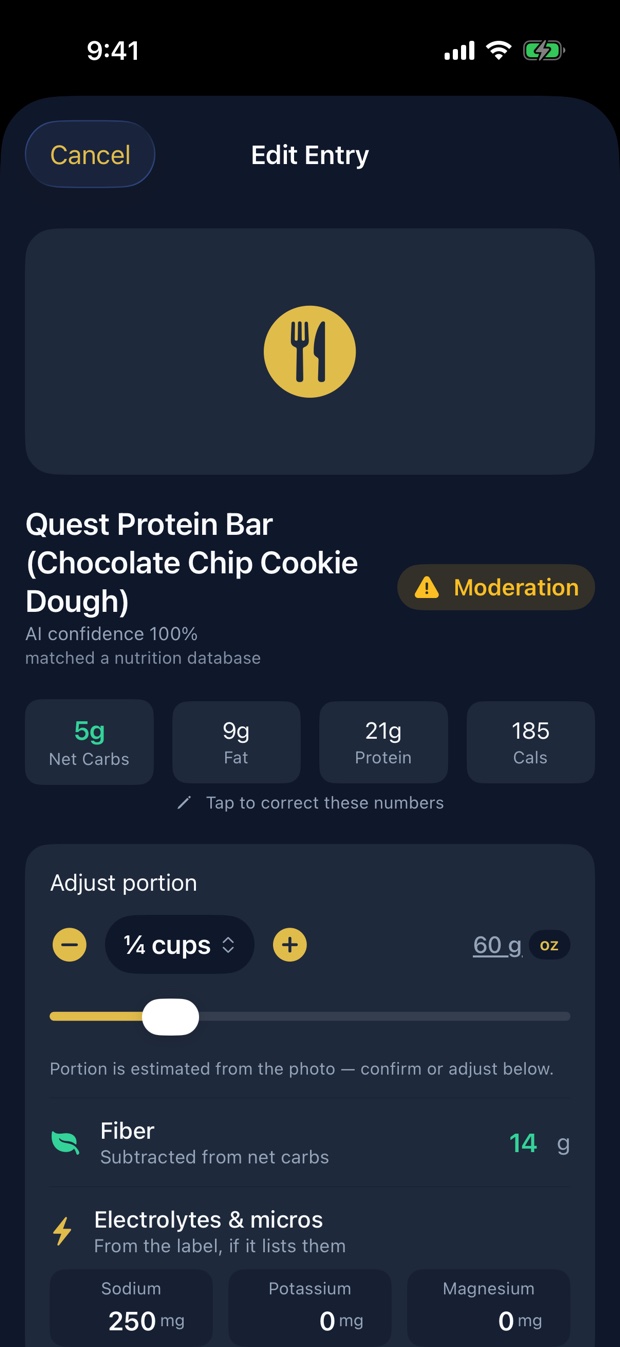
Jordan ordered a protein bowl because it sounded easier to track than a sandwich. He could see grilled meat, greens, avocado, and cheese. The sauce came already mixed through the bowl, and the menu did not list a complete recipe.
KetoLock’s photo scan produced a starting estimate for the visible foods. Jordan then checked the restaurant’s available nutrition information, added the sauce, and adjusted the serving. The review mattered more than the first number.
Macros are not a verdict
Protein, fat, carbohydrates, and fiber can help describe a meal. They do not determine whether the meal is right for every person. Goals, medications, health conditions, activity, and clinician advice can change what is appropriate.
KetoLock keeps net carbohydrates visible for people who choose to track them. It also keeps the meal editable because a camera cannot identify every ingredient or measure every portion.
Jordan’s four-part bowl check
- Base: greens, grains, noodles, or another foundation.
- Main items: protein and visible vegetables.
- Extras: cheese, nuts, fruit, or crunchy toppings.
- Finishing details: dressing, sauce, glaze, and the actual serving.
That short checklist made his record more complete without turning lunch into a research project.
Look beyond the main ingredient
Use KetoLock to start the meal record, then correct the details the camera cannot establish.
Download KetoLockSources and context
- CDC: Healthy Eating includes resources on carbohydrate counting and portion sizes.