 KetoLock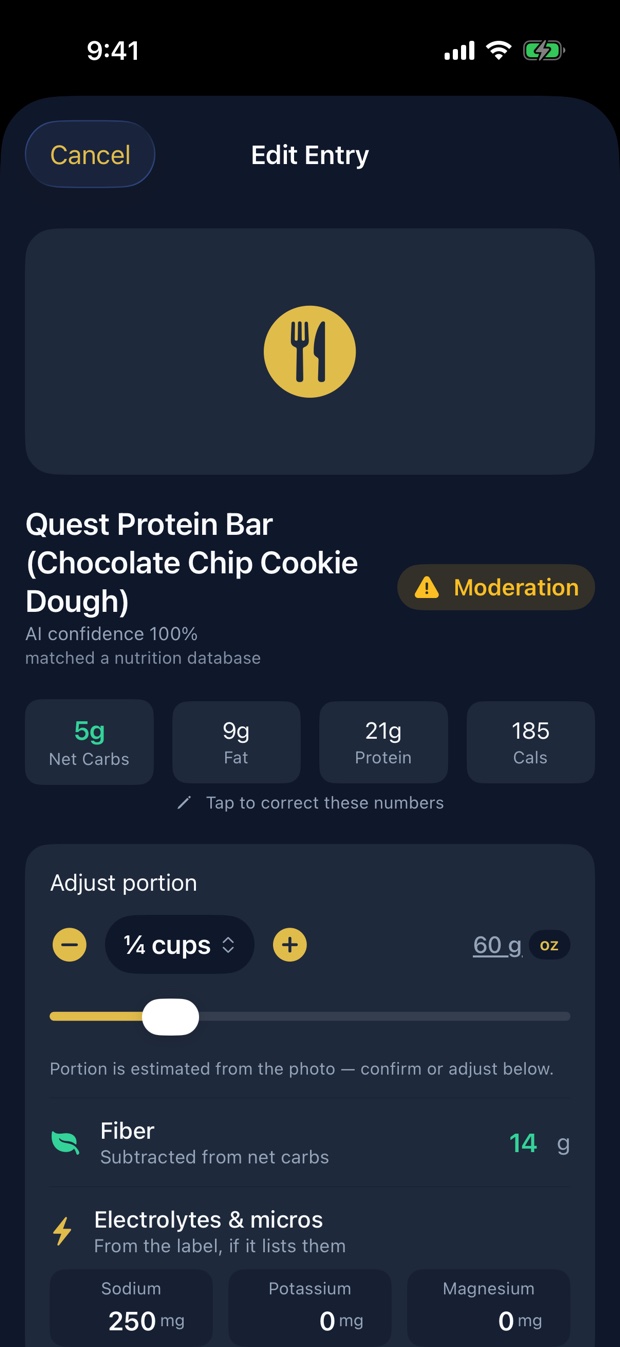
Nina was told that her blood test results needed follow-up. Her clinician—not an app—would determine whether she had prediabetes or another condition. While waiting, Nina was asked to think about her routines, including meals, activity, sleep, and weight history.
That sounded simple until she tried to remember a typical week. She recalled “salad,” “eggs,” and “a bowl,” but not the portions, sauces, drinks, or between-meal snacks.
A better record started with the plate
Nina began photographing meals in KetoLock. She treated each result as a draft. She checked the visible foods, corrected the suggested amounts, and added details the camera could not see. For packaged food, she compared the barcode result with the label and selected the serving she actually ate.
After several ordinary days, the record was specific enough to support a better conversation. It did not diagnose insulin resistance or predict blood glucose. It simply reduced the amount Nina had to reconstruct from memory.
Small changes require reliable feedback
NIDDK notes that planning and tracking progress can help people make lifestyle changes. KetoLock’s role in Nina’s routine was to make meal tracking quicker and reviewable. Her healthcare team remained responsible for testing, diagnosis, and individualized recommendations.
Make the next meal easier to review
Start with a photo, then correct the foods and portions using the best information available.
Download KetoLockSources and context
Insulin resistance and prediabetes are medical concerns that require appropriate professional evaluation.