 KetoLock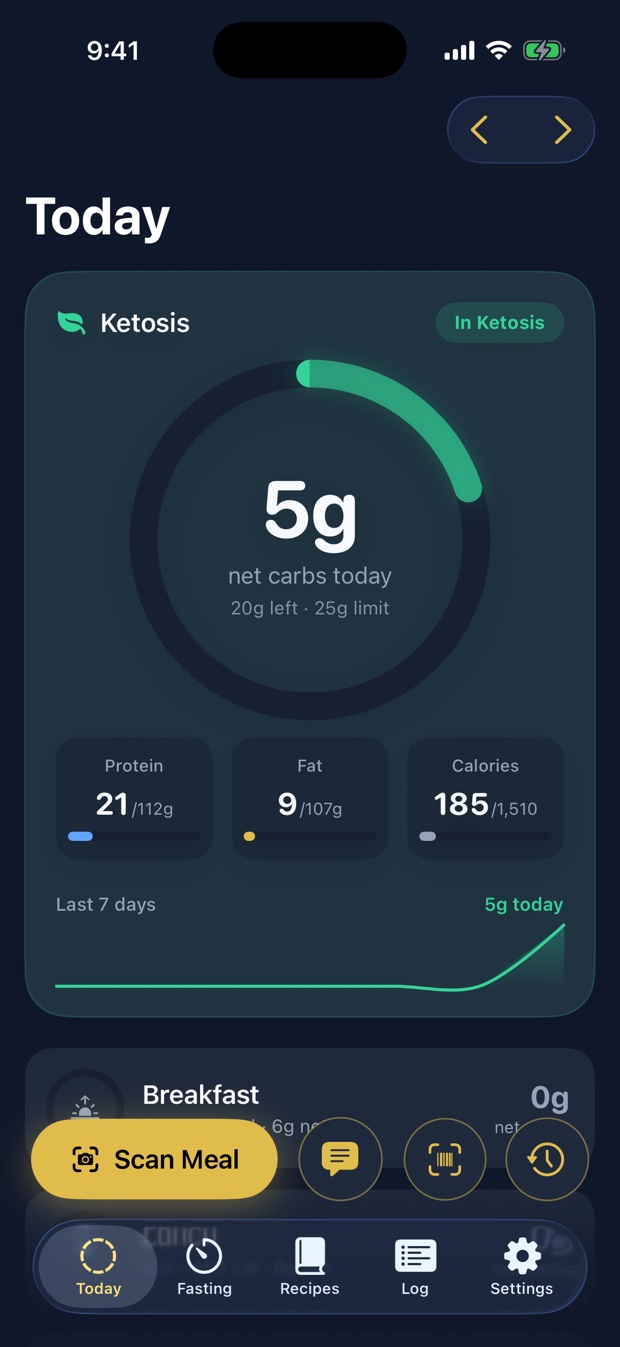
Mark could tell you every set and repetition from his workout. Ask what was in the post-gym bowl he ate three days ago, however, and the answer became “mostly chicken and vegetables.”
The missing details were rarely the chicken. They were the larger scoop, the sweetened sauce, the drink, or the handful eaten while cooking. None of those choices made the meal “bad.” They simply made his memory less accurate than he believed.
A quick scan replaced the end-of-day reconstruction
Mark began photographing the meal before eating. KetoLock suggested visible foods and portions, and he reviewed them while the plate was still in front of him. If a sauce came from a bottle, he could use the label. If the serving estimate looked wrong, he could change it.
The point was not perfection. The point was to create a record based on what he could see and verify instead of trying to rebuild the day at night.
Men’s health is larger than one macro
Food tracking cannot diagnose fatigue, hormone concerns, high blood pressure, or another health problem. Those require proper assessment. A consistent meal record can still help a person describe habits more clearly when speaking with a physician or dietitian.
For Mark, KetoLock’s useful job was narrow and practical: make the meal easy to capture, keep the uncertainty visible, and let him correct the result.
Give your next recovery meal a clearer record
Photograph the plate while the details are still in front of you.
Download KetoLockMark’s simple routine
- Take the photo before the first bite.
- Review the protein, vegetables, fats, sauces, and drinks.
- Correct portions rather than accepting the first estimate.
- Save only after the meal reflects what he knows.