 KetoLock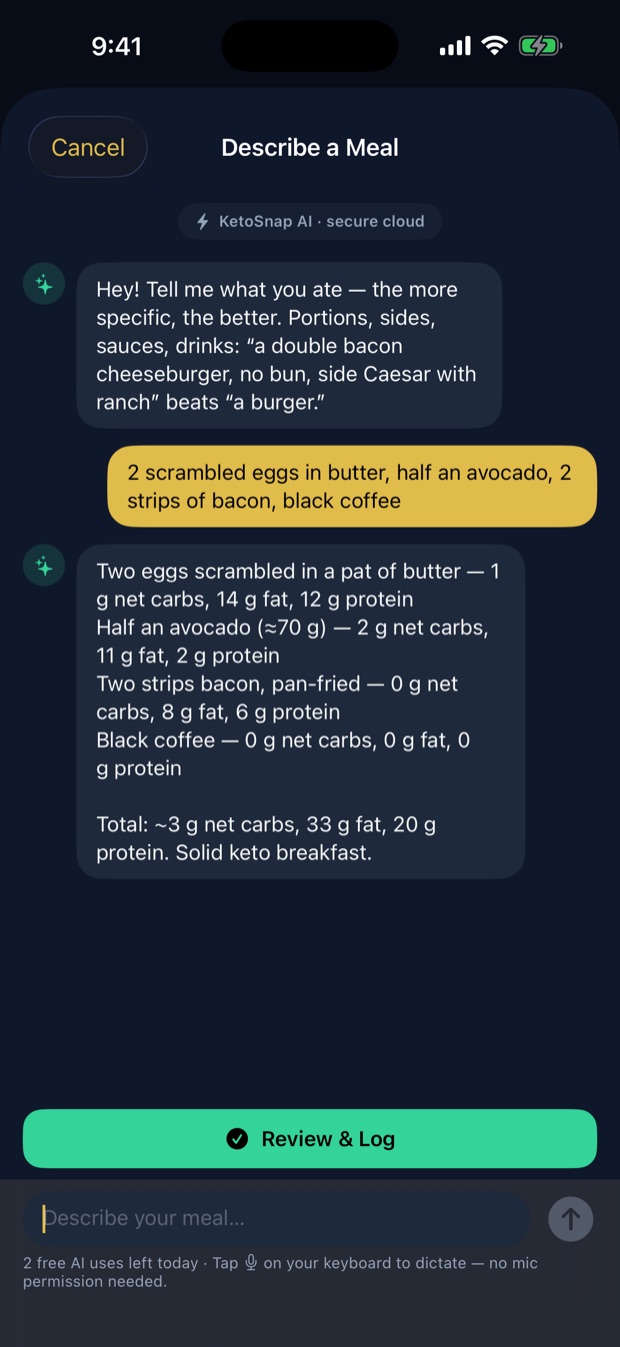
Maya had tried detailed food diaries. They worked for a few days, then meetings, commuting, and family responsibilities took over. By evening, she could remember the main meal but not the portion, dressing, snack, or drink.
She wanted more awareness around meals, not a second job. KetoLock gave her three practical ways to begin: photograph a plate, scan a package barcode, or describe a meal when the plate was already gone.
The fastest method depended on the food
For a plated lunch, Maya used the camera. For yogurt or another packaged food, she used the barcode and checked the product match and serving size. When she forgot to take a photo, she described the meal in plain language and reviewed the suggested entry.
No method removed the need for judgment. The camera could not see an ingredient inside a sauce, and a database record could not know how much she ate. KetoLock helped by keeping the result editable.
A record can support care without replacing it
Women’s health needs vary across life stages and medical histories. An app cannot diagnose hormone changes, insulin resistance, pregnancy-related needs, or another condition. Maya’s food record was useful because it helped her notice routines and arrive at healthcare conversations with more specific information.
Make the next meal easier to remember
Choose photo, barcode, or description—then review the result before saving.
Download KetoLockThe habit Maya kept
She stopped waiting for a perfect day. One accurate meal record was better than an ambitious diary she abandoned. Over time, the lower-friction routine gave her a clearer picture of ordinary days—the days that mattered most.